






Before Egypt: Predynastic Period Predates the Arab Migrations into Egypt by Thousands of Years.
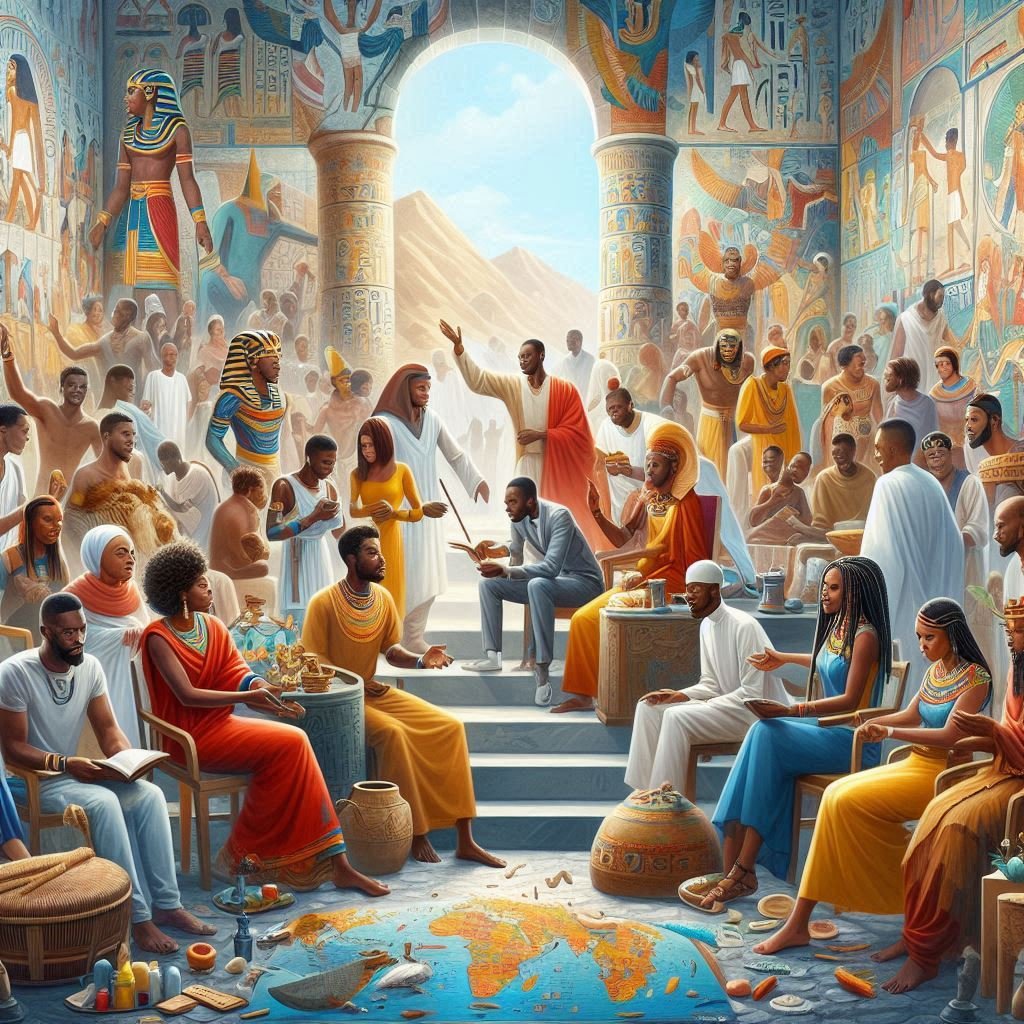
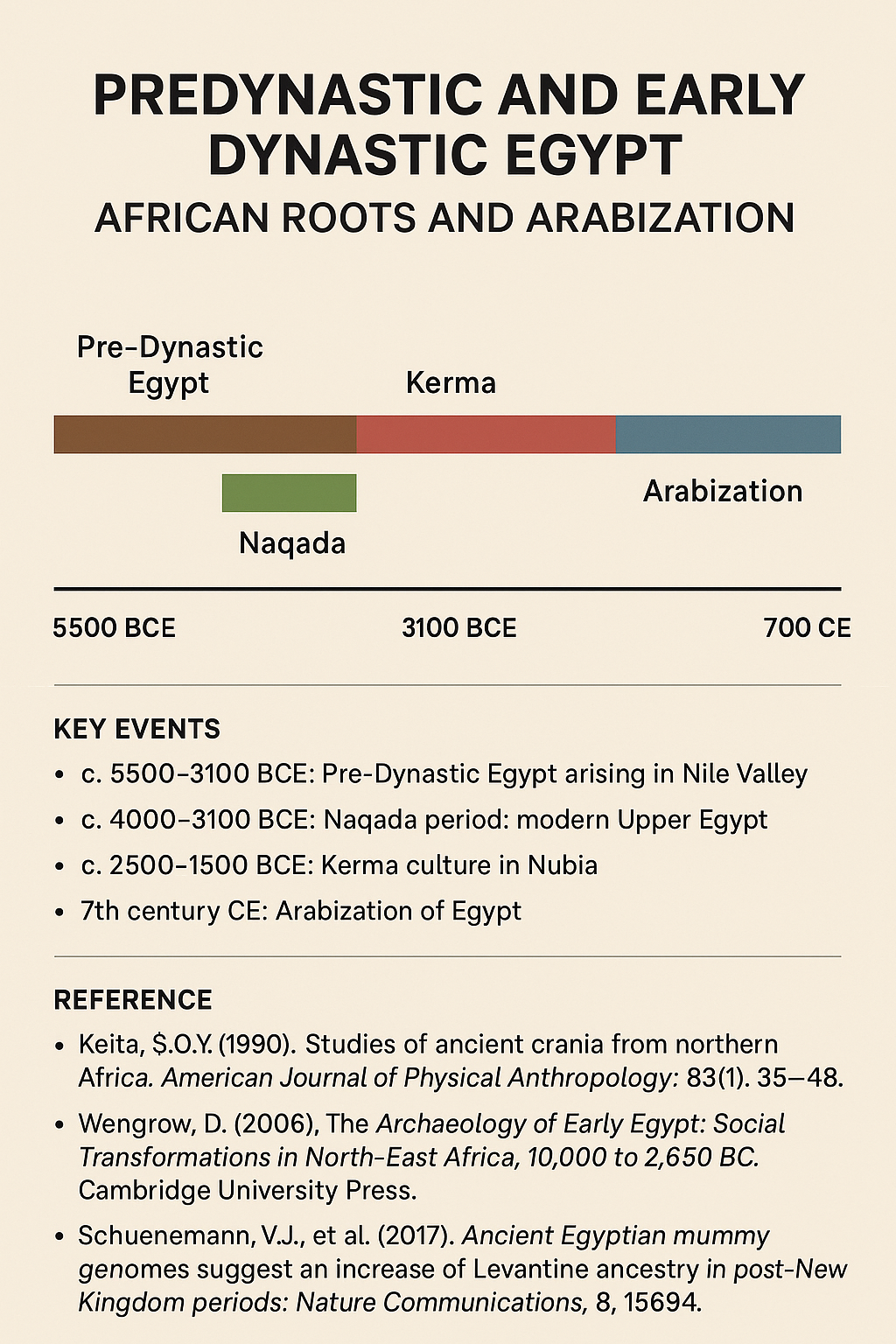
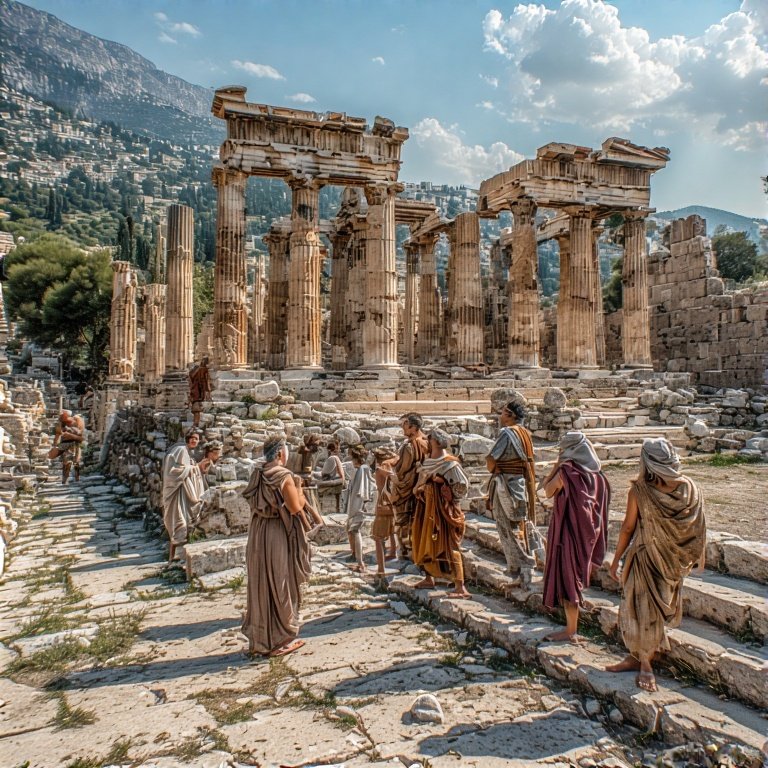
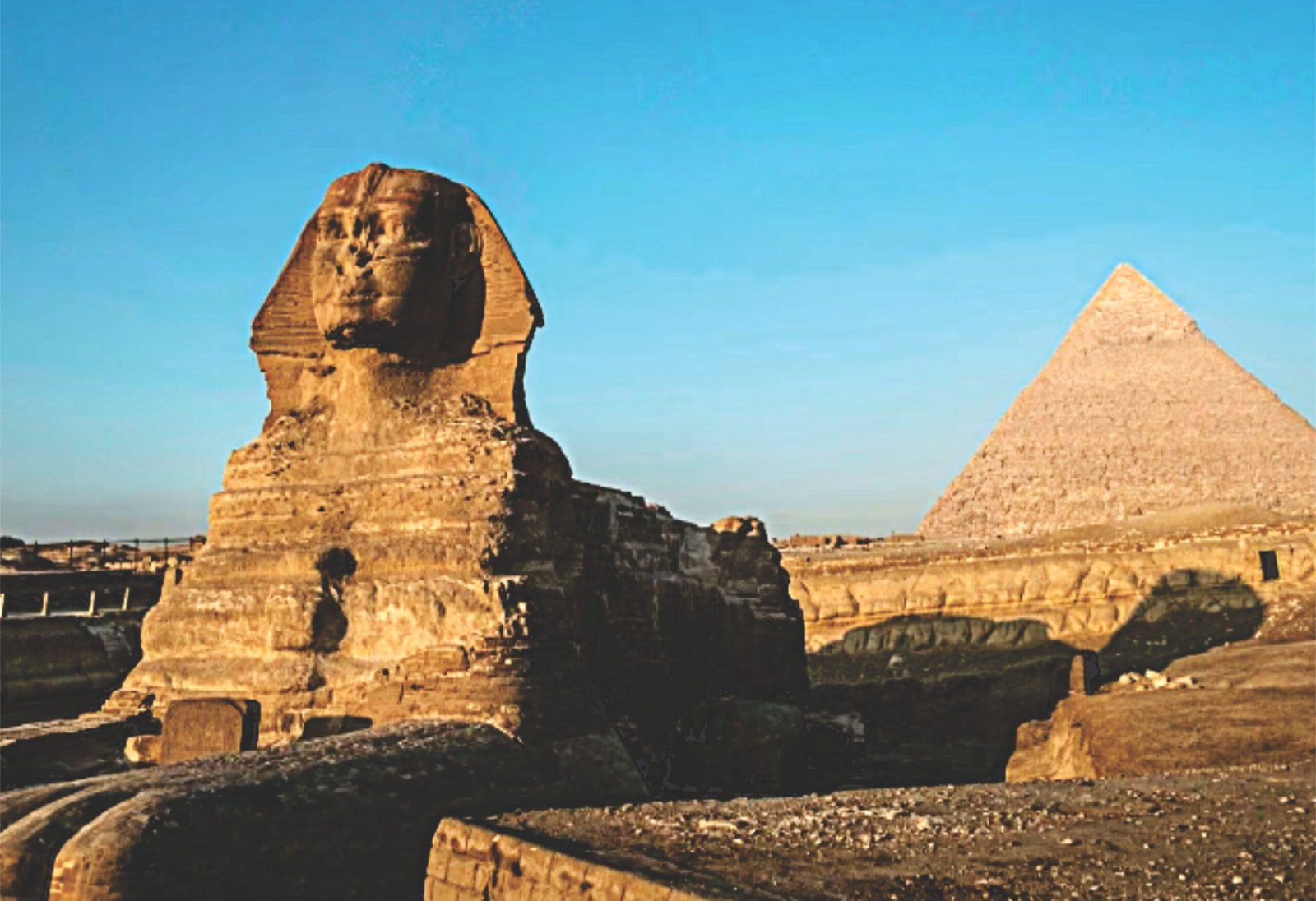
The predynastic period of African civilization, particularly in ancient Egypt, is a fascinating epoch that predates the Arab migrations into Egypt by thousands of years. This era, which spans from around 6000 BCE to the unification of Egypt around 3100 BCE, marks a time of profound development and cultural evolution among the ancient inhabitants of the Nile Valley long before the influence of Arab culture and the advent of Islam in North Africa. During the predynastic period, various tribes and communities of Africans began establishing settlements along the banks of the Nile.
The skeletal remains unearthed from Naqada and other predynastic sites in Upper Egypt bear significant implications for understanding of the region’s ancient populations. A critical examination of these remnants reveals that they are not representative of Arab ancestry. Instead, the data overwhelmingly links these remains to indigenous northeast African populations, which can be broadly classified as black Africans in terms of biological ancestry. This distinction is crucial for understanding the demographic and cultural history of ancient Egypt. The Arab influence in North Africa, particularly in Egypt, primarily occurred during and after the Islamic conquests of the 7th century AD. Prior to this transformative period, the inhabitants of Egypt were primarily Africans who populated Northeast Africa.
The skeletal analyses from Naqada and surrounding sites provide evidence of well-defined physical traits consistent with populations from this region. Measurements and genetic markers can help confirm the relationships between these remains and those of neighboring African tribes, painting a picture of a thriving, interconnected culture long before any Arab presence.
Understanding the biological ancestry of these remains also emphasizes the continuity of human occupation and adaptation in this part of Africa over millennia. The notion of a clear demarcation between ancient Egyptians and Africans is a misrepresentation that can perpetuate misunderstanding about the historical interactions within the continent. It is essential to dispel myths that link the ancient Egyptians exclusively with later Arab identities. This misconception not only undermines the indigenous roots of ancient Egyptian society but also obscures the rich tapestry of cultural and genetic heritage that has existed in Northeast Africa for thousands of years. Scholars argue that modern interpretations have romanticized the history of Egypt, often overlooking the complexities involved in its demographic transitions. The cultural and technological advancements achieved during the predynastic period occurred long before any significant Arab presence in Egypt. It is important to note that the Arab migrations into the region occurred thousands of years later. The arrival of Arabs in Egypt became particularly pronounced following the Islamic conquest of the 7th century CE, marking a shift in the demographic and cultural landscape of the area. This event took place over 3,000 years after the conclusion of the predynastic period, showcasing the vast temporal separation between these two historical moments.
Thus, the vibrancy of Egyptian civilization as it began in the predynastic period bears no direct influence from the Arab migrations that came much later. Instead, the early Egyptians developed their unique cultural identities, social hierarchies, and religious practices independently during the predynastic era, setting the stage for the glorious periods of the Old and Middle Kingdoms.
The skeletal remains from Naqada and other predynastic Upper Egyptian sites unequivocally illustrate a connection to the indigenous Northeast African populations. This emphasis on biological ancestry is paramount in constructing an accurate historical narrative. To acknowledge and celebrate the African roots of ancient Egyptian civilization not only honors the truth of its origins but also enriches our understanding of humanity’s collective past. As we continue to explore the intricacies of these ancient societies, it is vital to recognize the significance of these findings in reshaping our historical perspectives and fostering a greater appreciation for the profound legacy of black Africans in the cradle of civilization.
The anthropological findings derived from the analyses of skeletal remains excavated from the Badari, Naqada, and Abydos cemeteries in Egypt reveal significant insights into the population dynamics of ancient communities in the region. These studies highlight the cranial and dental affinities of these skeletal remains with populations from ancient Nubia, the Sahara, and the Horn of Africa, suggesting a complex web of interactions and migrations among these areas.
The implications of these findings are profound. They challenge contemporary perceptions of ancient Egyptian identity, which is often homogenized in popular discourse. Instead, they invite a re-examination of the diverse and multifaceted nature of ancient Egypt as a crossroads of various cultural and ethnic groups of Africans that contributed to its historical narrative. The genetic and cultural heritage of these skeletal remains underscores the importance of considering broader African contexts when interpreting the history of ancient Egypt.
Furthermore, these insights open avenues for further research into the social structures, burial practices, and daily lives of the individuals represented by these skeletal remains. The combination of archaeological, anthropological, and genetic studies has the potential to illuminate the interconnectedness of ancient communities and the rich tapestry of human history in the region.
Notably, research conducted by Keita in the early 1990s shed light on the connections between predynastic Upper Egyptians and their neighbors in Nubia and other regions of Northeast Africa. His findings suggested that the Upper Egyptians of that era were not a homogenous group but part of a broader network of communities that shared genetic and cultural ties with the Nubians and neighboring African populations.
In his 1990 and 1993 studies, Keita meticulously analyzed skeletal remains and other archaeological evidence to establish these links. His work pointed to a complex interaction of migration and cultural exchange that transcended the boundaries often imposed by modern political landscapes. By placing the Upper Egyptians within the context of the larger Northeast African population, Keita opened up new avenues for understanding the socio-cultural dynamics of ancient Egypt, highlighting the significance of Nubian influences.
Further reinforcing these connections, Irish (2006) contributed to the discourse through dental analysis, which provided additional evidence of the genetic ties between early Upper Egyptians and indigenous Sub-Saharan populations. This forensic approach utilized the characteristics of dental morphology to draw comparisons between various ancient populations. The data revealed notable similarities in dental features, reflecting shared ancestry and interbreeding practices among these groups.
The implications of these findings are profound, as they challenge conventional narratives that often portray ancient Egypt in isolation from its African heritage. Instead, they emphasize a more interconnected historical perspective, where culture and genetics flowed across regions, influencing identities and societal structures. The overlap between the Upper Egyptians and Sub-Saharan groups illustrates a shared human experience of adaptation and resilience in the face of environmental and social changes.
As we look deeper into the roots of ancient societies, the work of these scholars becomes increasingly critical in formulating a more inclusive and accurate portrayal of Africa’s historical and anthropological landscape. The acknowledgment of these relationships allows us to celebrate not just the uniqueness of ancient Egyptian civilization but also its place within the broader continuum of human history, marked by diversity and interrelation.
Anthropological & Cranial Studies
Keita, S.O.Y. (1990).
“Studies of ancient crania from northern Africa.” American Journal of Physical Anthropology, 83(1), 35–48.
Found that Predynastic and early Dynastic Upper Egyptians clustered closely with Nubians and other Northeast African groups rather than later Arab or European populations.
Keita, S.O.Y. (1993).
“Further studies of crania from from ancient northern Africa: An analysis of crania from first dynasty Egyptian tombs, using multiple discriminant functions.” American Journal of Physical Anthropology, 90(1), 35–48.
Showed strong biological continuity between Predynastic Upper Egypt and populations of the Nubian-Sudanese corridor.
Irish, J.D. (2006).
“Who were the ancient Egyptians? Dental affinities among Neolithic through postdynastic peoples.” American Journal of Physical Anthropology, 129(4), 529–543.
Dental morphology linked Predynastic Upper Egyptians with Nubians and Sub-Saharan groups more than with Near Eastern populations.
2. Archaeological Evidence of Cultural Links
Wengrow, D. (2006).
“The Archaeology of Early Egypt: Social Transformations in North-East Africa, 10,000 to 2,650 BC.” Cambridge University Press.
Details the cultural connections between Upper Egypt, Nubia, and the Sahara, emphasizing African roots.
Bard, K.A. (2015).
“An Introduction to the Archaeology of Ancient Egypt.” Wiley-Blackwell.
Notes that the Naqada culture developed from earlier African Neolithic traditions along the Nile.
3. Genetic Insights
Schuenemann, V.J., et al. (2017).
“Ancient Egyptian mummy genomes suggest an increase of Levantine ancestry in post–New Kingdom periods.” Nature Communications, 8, 15694.
Indicates that earlier Egyptians had more African ancestry, while later periods (after New Kingdom) show increased Levantine and foreign admixture.
Keita, S.O.Y., & Boyce, A.J. (2005).
“Genetics, Egypt, and History: Interpreting Geographical Patterns of Y Chromosome Variation.” History in Africa, 32, 221–246.
Stresses that early Nile Valley populations were primarily indigenous Africans.


 Adinkra Admin